
Overview of Fuel Injector Malfunctions and Countermeasures
As an important component of the engine fuel system, the performance of fuel injectors directly affects the combustion efficiency and power output of the engine. However, due to various reasons, fuel injectors may experience various malfunctions during use. This article aims to introduce some common fuel injector faults and their solutions, helping you better understand and address these challenges.
1. Cause of malfunction
If there is insufficient or no fuel injection during the use of the fuel injector, it may be due to the following reasons: the needle valve of the fuel injector is too tightly matched with the valve body or is stuck by dirt, resulting in a decrease in the oil outlet section and insufficient or no fuel injection. In addition, the carbon deposits on the fuel injector block or partially block the injection holes, further reducing the fuel injection amount. The pressure regulating spring of the fuel injector has excessive elasticity, causing the pressure of the fuel injection pump to be unable to open the needle valve or only able to open a small part, and then immediately close, resulting in insufficient fuel injection. The fuel injection pump itself has a malfunction, such as not pumping oil or pumping too little oil, which causes the oil pressure to be unable to overcome the pressure of the pressure regulating spring, resulting in insufficient or unable to open the needle valve, leading to insufficient or even no fuel injection.
treatment method
The problem of insufficient fuel injection can be solved by removing dirt, replacing damaged parts, adjusting the pressure regulating spring, repairing or replacing the fuel injection pump, and other methods. The specific method includes checking the movement between the needle valve and the valve body, removing the dirt, and ensuring that the spray is in good condition before continuing to use; Otherwise, new parts should be replaced. Meanwhile, pay attention to emptying the gas in the pipeline. Clean the fuel injector with carbon deposits and observe the smoothness of the nozzle. If it is still not smooth, replace it with a new part. Adjust the pressure of the pressure regulating spring of the fuel injector, observe the spray and decide whether to replace the spring. Repair or replace damaged parts of the fuel injection pump to ensure its normal pumping of fuel.
2. Cause of malfunction:
Air leakage and oil leakage problems often occur in vehicles that have been repaired or maintained, mainly related to improper installation operations, such as the concave shape of the fuel injector pressure plate not being installed downwards, unilateral bias during tightening, or not tightening evenly according to the specified torque. These can all cause deformation and deviation of the fuel injector head, leading to air leakage and oil leakage. In addition, incomplete cleaning of dirt or replacement of gaskets and other components that do not meet the requirements can also cause such malfunctions.
treatment method
When reinstalling the fuel injector, it is necessary to thoroughly clean the carbon deposits in the installation holes. The copper gasket used must be kept flat and cannot be replaced with asbestos board or other material gaskets to ensure good heat dissipation and sealing effect. If self-made copper gaskets are required, they should be processed with purple copper plates according to the specified thickness to ensure that the distance of the fuel injector protruding from the cylinder head plane meets the technical requirements. Please note that excessive or insufficient thickness of copper gaskets can affect the compression ratio of the cylinder.
3. Cause of malfunction
The failure of a damaged return pipe is usually caused by severe wear of the needle valve or poor fit between the needle valve body and the injector housing, which can significantly increase the return oil volume of the injector, sometimes even up to 0.1-0.3kg/h, leading to damage to the return pipe.
treatment method
Once the return oil pipe is found to be damaged, it should be replaced immediately and the sealing during installation should be ensured to ensure that the return oil can flow smoothly back to the oil tank. In addition, if the return pipe is connected to the diesel filter, a one-way valve should be installed at its terminal to prevent diesel from flowing back into the injector from the filter.
4. Cause of malfunction
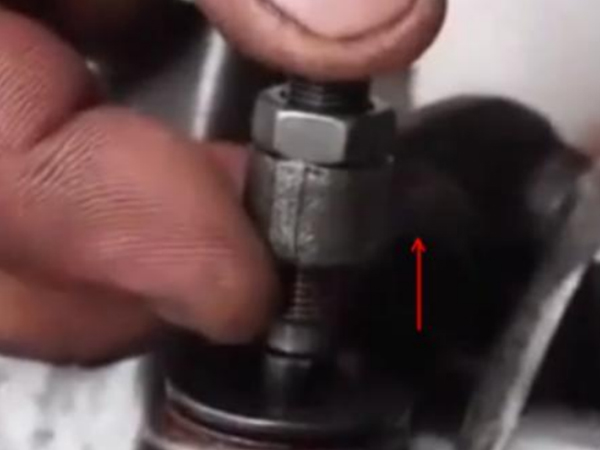
The low injection pressure of the fuel injector may be caused by various factors. The main factors include the loosening of the pressure regulating screw or locking nut of the pressure regulating spring, which leads to insufficient pressure or breakage of the pressure regulating spring; The gap between the guide part of the needle valve and the valve body increases, causing leakage and affecting the sealing effect of the needle valve cone surface; The contact surface between the fuel injector and the fuel injector valve body is uneven, resulting in oil leakage and causing the high-pressure fuel of the fuel injection pump to release pressure; And the insufficient fuel pressure of the fuel injection pump leads to a decrease in fuel injection pressure.
treatment method
In the face of such faults, the first step in maintenance is to deal with loose parts, that is, tighten the pressure regulating screw and locking nut (which need to be adjusted after tightening). If the gap between the valve seat and the injector housing contact surface becomes larger or the seal is not tight, and cannot be improved by grinding, then it should be considered to replace the injector or housing to ensure sealing. At the same time, inspection can be carried out on the fuel injection pressure tester. If any non conformities are found, the fuel injector components must be replaced to increase the delivery pressure. When adjusting, the starting point of the pressure gauge pointer should be taken as the reference point, and the protective cap should be locked after adjustment.
5. Cause of malfunction
The problem of oil dripping is usually closely related to the decrease in sealing performance. During long-term use, the sealing cone of the needle valve body may be damaged due to the strong impact of the needle valve and the continuous spraying of high-pressure oil, resulting in scratches or spots, which can lead to a deterioration of the sealing effect and cause oil dripping.
treatment method
The prominent feature of this malfunction is that white smoke is emitted from the exhaust pipe, which then turns into black smoke, while the exhaust pipe emits irregular blasting sounds. To address this issue, the fuel injector can be disassembled and a small amount of chromium oxide fine grinding paste can be gently applied to the needle valve head to finely grind the cone surface. Afterwards, thoroughly clean with diesel and reinstall for testing. If the problem persists, it may be necessary to replace the needle valve components with new ones.
6. Causes and Solutions of Malfunctions
The fuel injection advance angle is the angle that the crankshaft rotates between the start of fuel injection and the top dead center of the piston. Its optimal value is determined through rigorous testing at the rated speed and full load operation of the diesel engine. This value may vary due to differences in diesel quality and the actual condition of the engine. The main causes of the malfunction are improper adjustment of the adjustment screw of the fuel injection pump roller body, improper adjustment of the coupling, improper adjustment of the fuel injection pressure of the injector, and inadequate closure of the fuel injection pump outlet valve or injector needle valve. The handling method includes first eliminating the fault of loose closure, and then checking and adjusting the fuel injection advance angle. This usually involves checking and adjusting the fuel supply timing of the first cylinder plunger, using it as a reference, and then checking and adjusting the fuel supply timing intervals of other cylinder plungers one by one according to the engine's working sequence.
7. Cause of malfunction
Poor injection performance can lead to issues such as decreased engine power and unstable engine speed. This is usually related to factors such as high diesel viscosity, insufficient injection pressure, wear of injection holes or guide parts, carbon deposition, improper adjustment of pressure regulating springs, wear of spring end faces or decreased elasticity.
treatment method
Comprehensive cleaning, maintenance, and readjustment measures are required for the fuel injector to ensure its normal working condition.
8. Common faults and causes
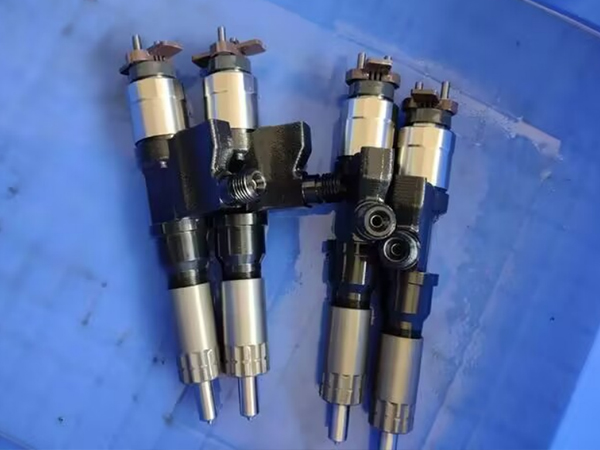
In high-pressure common rail fuel injection systems, electronic fuel injectors play a crucial role. The quality of its technical condition directly affects the overall performance of the diesel engine fuel supply system. Common faults of fuel injectors include non injection or abnormal injection, slow injection response, and non-compliance with injection shape and atomization effect. These faults are often caused by various factors, such as burning out of the control solenoid valve coil of the fuel injector, wear of the solenoid valve, stuck needle valve, poor sealing, and wear or blockage of the fuel injection hole. Meanwhile, abnormalities in the control circuit or its connection lines of the fuel injector can also affect its normal operation.